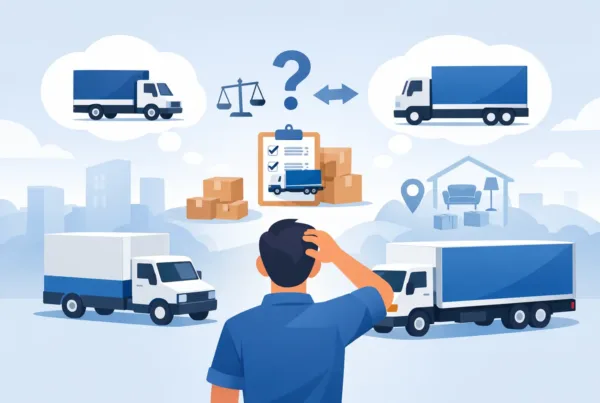
A retail delivery can fail before the truck leaves the warehouse. The wrong vehicle, an unconfirmed receiving slot, or a missing contact number can leave stock waiting outside while a store team is busy with customers. Knowing how to plan retail deliveries properly helps retailers, suppliers, and operations teams protect stock, control costs, and keep shelves ready for sale.
For Abu Dhabi retail locations, planning also means accounting for mall receiving procedures, loading bay access, traffic conditions, and the type of goods being moved. A delivery of boxed garments has different needs from furniture, display stands, heavy appliances, or retail fixtures. Good planning starts with the load, then builds a realistic delivery schedule around it.
Start With the Delivery Requirements
Before booking a truck or setting a delivery time, define exactly what must be moved. Confirm the number of cartons, pallets, pieces of furniture, racks, equipment, or promotional materials. Record the approximate weight and dimensions, especially for oversized items that may not fit safely in a standard pickup bed.
The destination matters just as much. Ask whether the store has a dedicated loading bay, height restrictions, a service entrance, security check-in process, or specific delivery hours. Major retail destinations such as Yas Mall, Reem Mall, Marina Mall, and Dalma Mall may have controlled access arrangements that require advance coordination. Never assume a truck can stop at the nearest customer entrance.
You should also confirm who will receive the goods. A named store manager, receiving supervisor, or site representative prevents delays when the driver arrives. Share their phone number with the transport team, and make sure that person knows the planned time window and type of delivery.
How to Plan Retail Deliveries Around Store Hours
Retail stores are built around customers, not deliveries. That is why the fastest route is not always the best delivery plan. Many stores prefer receiving stock before opening, after closing, or during a designated back-of-house time slot. Delivering during busy sales periods can create congestion, interrupt staff, and increase handling risks.
Set a delivery window rather than relying on one exact minute. For example, a scheduled arrival between 8:00 and 9:00 a.m. gives the driver and receiving team practical flexibility while still keeping the operation controlled. If the shipment is urgent, confirm whether the store can accept it outside its normal receiving schedule before dispatching the vehicle.
For multi-store deliveries, arrange the route based on receiving times first and distance second. A nearby shop with a late receiving slot may need to be visited after a more distant location that only accepts deliveries early in the day. This approach reduces waiting time and helps avoid missed appointments.
Build extra time into the schedule for security checks, loading bay queues, unloading, document signing, and access to upper floors. A route that looks simple on a map may take much longer inside a large shopping center or commercial complex.
Choose the Right Truck for the Load
Vehicle selection affects safety, timing, and delivery cost. Using a truck that is too small can require multiple trips, while a vehicle that is unnecessarily large may face access limitations at some delivery points. The best choice depends on the quantity, dimensions, weight, and handling requirements of the goods.
A 1-ton pickup can suit small retail replenishment loads, cartons, displays, and lightweight stock. A 3-ton or 5-ton truck is often more practical for larger store deliveries, furniture, fixtures, bulk inventory, and multiple pallets. For heavy materials, large equipment, or difficult loading requirements, a 7-ton or 10-ton vehicle may be necessary.
The body type also matters. An open pickup works well for items that are securely strapped and protected from the conditions. A closed truck gives better protection for boxed merchandise, electronics, clothing, and sensitive retail stock. A tail lift can make unloading safer where no loading dock or forklift is available. For unusually heavy items, a crane Hi-Up truck may be the better option.
Do not focus only on weight capacity. Measure the longest, widest, and tallest item, then consider how it will be loaded, secured, and removed at the destination. A load that technically fits may still be unsafe or difficult to unload if it is poorly arranged.
Prepare Goods for Fast, Safe Unloading
A well-packed truck saves time at every stop. Group stock by store location and place the first delivery items where they can be accessed without moving other goods. If one truck serves several branches, loading order should match the route order.
Each package should have clear identification. At minimum, include the destination, contact name, and delivery reference number. For larger jobs, use a simple packing list that shows the quantity of each item. This helps the receiving team check the shipment quickly and gives the driver a clear record of what has been handed over.
Secure the load with suitable straps, padding, and protective materials. Heavy items should be placed low and balanced across the vehicle bed. Fragile stock should not be stacked beneath heavier cartons, and loose items should never be left free to shift during transport.
Check whether special equipment is needed before the truck departs. This may include a trolley, pallet jack, lifting support, protective blankets, or additional workers for bulky pieces. It is much easier to arrange these requirements in advance than to discover them at a loading bay.
Confirm Access, Documents, and Site Rules
Retail deliveries often involve more coordination than a direct delivery to a warehouse. Some locations require vehicle details, driver identification, a delivery order, purchase order, or approval from building management. Others may have restrictions on noise, parking, elevator use, or unloading times.
Create one clear job brief for the driver. It should include the pickup address, destination, store contact, approved delivery window, loading bay instructions, vehicle requirements, and notes about special handling. If there are several stops, list them in the correct order with the planned arrival time for each one.
For deliveries to malls, event venues, or high-traffic commercial areas, confirm access requirements at least one business day ahead when possible. Same-day work can be arranged for urgent needs, but advance notice gives everyone more room to solve access issues before the vehicle is on the road.
Keep proof of delivery simple and organized. A signed delivery note, receiver name, time of handover, and any shortage or damage notes provide useful protection for both the retailer and the supplier. If a store cannot accept the full shipment, record what was accepted and what remains on the truck.
Communicate Before, During, and After the Delivery
Most delivery problems are communication problems. The store may not know the truck is coming, the driver may not know which gate to use, or the loading team may be unavailable. A short confirmation call before dispatch can prevent all three issues.
The driver should have a direct contact number for the receiving person, not only a general store number. The operations coordinator should also be available to respond if the destination changes, access is delayed, or the customer requests a different unloading point.
For scheduled retail work, send an arrival update when the truck is close to the location. This gives the receiving team time to open the service entrance, prepare space, and assign staff. After unloading, confirm completion and report any exceptions immediately rather than waiting until the end of the day.
Plan for Delays Without Losing Control
Even a well-organized plan can face traffic, loading bay congestion, delayed stock readiness, or a store that is not ready to receive goods. The goal is not to pretend delays will never happen. The goal is to prepare a response before they do.
Allow reasonable buffer time between stops, particularly when delivering bulky goods or serving busy retail centers. Keep the next store informed if the schedule changes. If a delivery cannot be completed, agree on a revised receiving time instead of leaving goods in an unauthorized area or rushing an unsafe unload.
For regular retail routes, review performance each week. Look at recurring waiting times, unsuccessful delivery attempts, truck capacity use, and common access problems. Small adjustments to delivery windows or vehicle type can reduce wasted time across every future run.
Reliable retail delivery is built on clear details, not last-minute guesswork. When you need flexible transport support across Abu Dhabi, Fast Movers General Transport LLC SPC can provide 1-ton to 10-ton pickup trucks, closed trucks, tail lift vehicles, and experienced drivers for planned or urgent store deliveries. Give the transport team the right information early, and your goods can arrive ready for the sales floor rather than waiting at the loading bay.