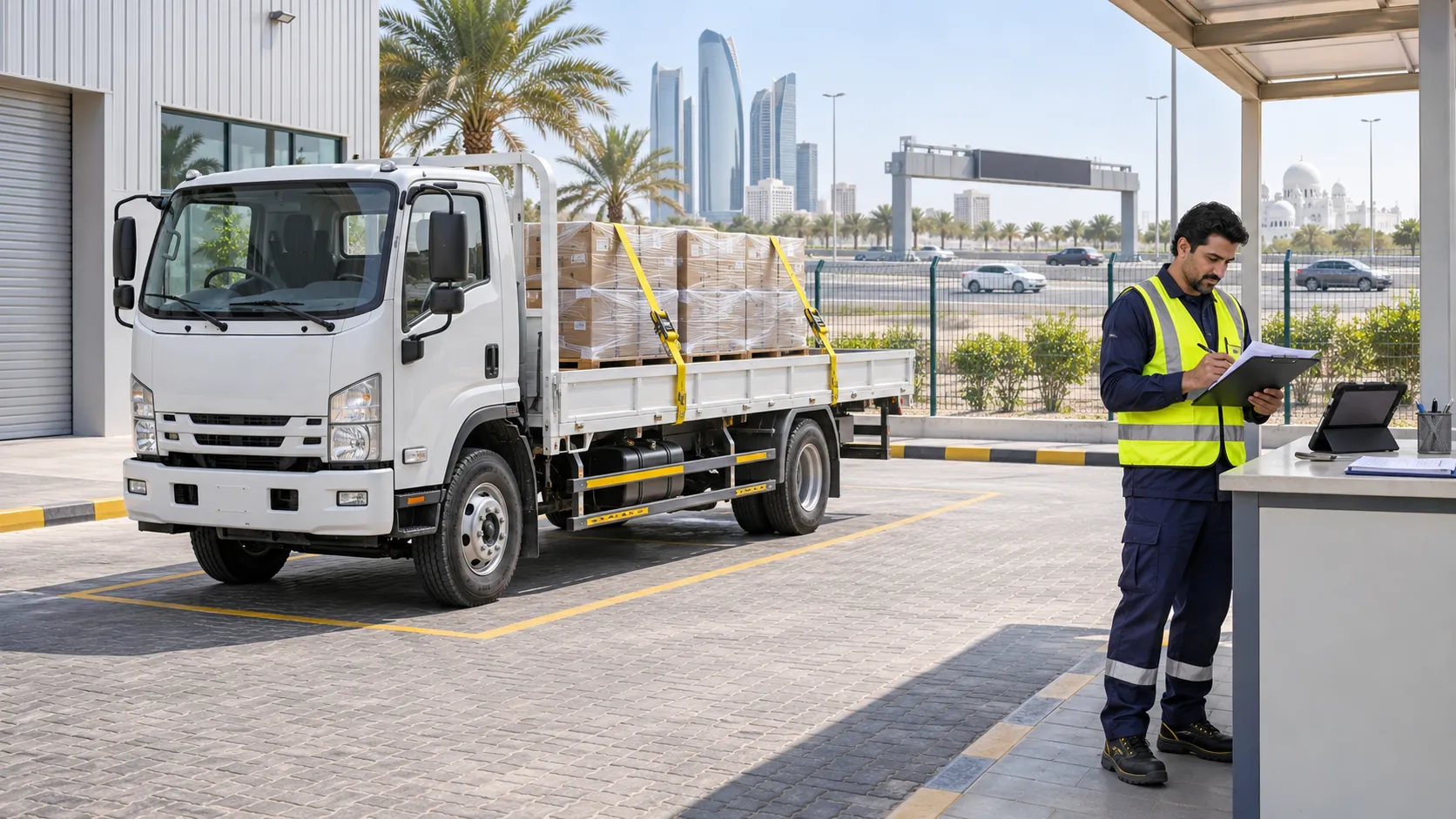
A truck delivery in Abu Dhabi can face delays if the driver is unaware of local road restrictions. For example, a furniture shop in Musaffah may book an early morning delivery to Abu Dhabi city, only to find that the truck cannot enter during restricted hours.
Heavy vehicles can’t use Abu Dhabi city roads during set peak hours. Darb tolls apply on the bridges into Abu Dhabi Island at peak times. Loads must stay within legal weight limits and be properly secured. Many buildings and sites also need permits or gate passes before a truck arrives.
Truck Timings and Restricted Hours
Truck timings are the rule that catches most people out. Booking pickup truck rental services with drivers who know Abu Dhabi’s restricted hours helps you avoid delays and fines.
Peak-Hour Restrictions for Heavy Vehicles
According to an Abu Dhabi Mobility update from January 2025, heavy vehicles are restricted on Abu Dhabi city roads from 6:30 to 9 AM and 3 to 7 PM, Monday to Thursday. On Fridays, the limits are 6:30 to 9 AM and 11 AM to 1 PM.
Roads Closed to Trucks
From December 2025, trucks are banned from Sheikh Maktoum bin Rashid Road (E11) and Al Raha Beach Road (E10). They’re redirected to Al Faya–Saih Shuaib Road (E75) and Al Adla Road.
Ramadan and Holiday Changes
Restricted hours often change during Ramadan and public holidays. Check the latest notice from Abu Dhabi Mobility or Abu Dhabi Police first.
Darb Toll System For Trucks And Pickups
Darb is Abu Dhabi’s road toll system. It adds to your delivery costs, so it’s worth understanding before you book a truck.
Where and When Tolls Apply
Darb gates sit on the Sheikh Zayed, Sheikh Khalifa, Al Maqtaa, and Mussafah bridges. Tolls apply Monday to Saturday, 7 to 9 AM and 3 to 7 PM. Sundays and public holidays are free.
How Much Darb Costs
Each crossing during peak hours costs AED 4. Since September 2025, private vehicles no longer have a daily or monthly cap. Ask your transport provider whether tolls are included in your quote.
Weight Limits and Overloading Fines
Overloading damages roads, strains trucks, and puts other drivers at risk. The UAE takes it seriously and fines it heavily.
Federal Weight Limits
The UAE Ministry of Energy and Infrastructure sets maximum weights for heavy vehicles on federal roads. A 2-axle vehicle is limited to 21 tons, and a 3-axle vehicle to 34 tons.
Overloading Fines
Fines start at AED 400 for each extra ton and rise for bigger overloads, up to AED 15,000. Book the right truck size for your cargo.
Permits and Access Rules
Abu Dhabi buildings, communities, and industrial zones often have their own entry rules. Check them early to avoid wasted trips.
Buildings and Communities
Towers in areas like Al Reem Island often need a lift booking and notice to security. Gated communities may need a gate pass or move-out permit before a truck can enter.
Industrial Zones and Ports
Sites in Musaffah, ICAD, KIZAD, and near Khalifa Port may need gate passes or set delivery windows. Share these details in advance.
Abu Dhabi Truck Rules at a Glance
This table sums up the key truck rules in Abu Dhabi. Rules change, so always check the latest official updates before your trip.
| Rule | What it means | Tip |
| Peak-hour restrictions | Heavy vehicles restricted on city roads at peak times | Book early morning or midday slots |
| Truck-banned roads | No trucks on E11 and E10 | Use E75 and Al Adla Road |
| Darb tolls | AED 4 per crossing at peak times | Plan off-peak or Sunday trips |
| Weight limits | Set limits per axle count | Choose the right truck size |
| Load securing | Cargo must be tied and covered | Use straps, nets and tarps |
| Site permits | Gate passes or lift bookings | Arrange them before booking |
How Professional Transport Services Follow Abu Dhabi Truck Rules
A reliable transport company ensures compliance, safe deliveries, and fine-free operations by following these six key practices:
- Check Route & Time Restrictions: Plan trips outside heavy-vehicle peak hours and avoid truck-restricted roads.
- Handle Darb Tolls: Ensure proper registration and factor toll peak times into scheduling.
- Right-Size the Truck: Match vehicle capacity to cargo weight and volume to avoid overloading penalties.
- Secure Every Load: Properly balance goods using heavy-duty straps, nets, or tarps before setting off.
- Manage Permits & Site Access: Arrange required gate passes, security approvals, or lift bookings in advance.
- Maintain Vehicle Roadworthiness: Perform regular safety checks on brakes, tires, lights, and mirrors.
What to Do Before Booking a Truck
A few quick checks before booking keep your delivery legal, on time, and free from surprise costs. Start with these.
Check the Time and Route
Pick a delivery time outside restricted hours. Check whether your route crosses a Darb gate or uses a truck-banned road.
Confirm Weight and Access
Estimate your cargo weight and choose the right truck size. Confirm gate passes, lift bookings, and parking at both locations.
Which Vehicles Are Affected by Truck Restrictions?
Truck restrictions in Abu Dhabi may apply differently depending on the vehicle’s size, weight, and purpose. Always confirm the latest regulations for your specific vehicle.
Pickup Trucks
Small pickup trucks used for deliveries and cargo transport may have fewer restrictions than heavy vehicles, but access rules can vary depending on the area and the load being carried. A 1-ton pickup truck suits smaller deliveries, while a 1.5-ton pickup truck offers more capacity for business supplies, furniture and general cargo. For larger loads, a 3-ton pickup truck may be a suitable option. Always confirm the vehicle’s permitted load and route before booking.
Light Commercial Vehicles
Light commercial vehicles used for business deliveries can generally operate in most areas, although certain buildings, communities, and work sites may impose access requirements.
Heavy Trucks
Heavy trucks carrying large loads are usually subject to the strictest restrictions, including designated operating hours and route limitations within Abu Dhabi.
Flatbed Trailers
Flatbed trailers often transport oversized materials such as steel, pipes, and machinery. Additional route planning and permit requirements may apply depending on the cargo dimensions.
Crane Trucks
Hi-Up and crane trucks used for lifting equipment and construction materials may need extra space for loading and unloading and may be subject to site-specific access rules.
Book a Rule-Ready Truck in Abu Dhabi With Truck Pickup Rental
Since 2020, Fast Movers has offered trucks with trained, licensed drivers who know Abu Dhabi’s roads and timings. Choose from 1-ton to 10-ton pickups, tail-lift, closed box, and hi-up crane trucks, and flatbed trailers.
Safe, Insured and Tracked
Our trucks are insured, well-maintained, and GPS-tracked. We serve Abu Dhabi city, Musaffah, ICAD, KIZAD, Khalifa City, and all Emirates with 24/7 support.
Get Your Quote Today
Tell us your cargo, route, and preferred time. WhatsApp +971 50 115 1640 or visit Truck Pickup Rental to book the right truck with flexible hourly to monthly plans.
Conclusion
Abu Dhabi’s truck rules cover timings, tolls, weight limits, permits, and safety. Plan around restricted hours, choose the right truck, and secure every load. Work with a professional transport service to help ensure your deliveries follow local requirements. Then your goods move smoothly, legally, and with complete peace of mind.
FAQs
Here are quick answers to the questions people ask most about truck rules, tolls and delivery timings in Abu Dhabi.
Can trucks enter Abu Dhabi city during peak hours?
Heavy vehicles are restricted on city roads during peak hours. Plan deliveries for early morning, midday or evening slots instead.
Do pickup trucks pay Darb tolls?
Vehicles crossing Darb gates at peak times pay AED 4 per crossing, unless exempt. Sundays and public holidays are toll-free.
What happens if a truck is overloaded?
Overloaded heavy vehicles can be fined from AED 400 per extra ton, up to AED 15,000, and risk serious safety problems.