


A truck that looks right for the job can still create delays if the load needs more protection, easier loading access, or better restraint. The open truck vs closed truck decision affects how safely your goods travel, how quickly the crew can load, and what happens if road dust, heat, or unexpected weather reaches the cargo. For a home move, site delivery, retail collection, or event setup, selecting the body type before booking is a practical way to avoid costly changes on the day.
At Fast Movers General Transport LLC SPC, we help customers arrange pickup and truck rentals with experienced drivers across Abu Dhabi and nearby UAE locations. The best option depends on the cargo itself, the pickup and drop-off points, and the level of protection required.
What Is an Open Truck?
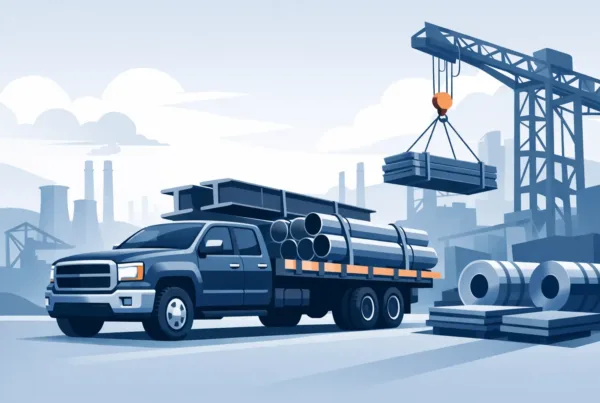
An open truck has an uncovered cargo bed, usually with side panels or removable rails. Open pickups, flatbed trucks, crane Hi-Up trucks, and flatbed trailers fall into this category. The top of the load remains open, making it easier to lift, place, and remove large materials.
This is often the practical choice for construction materials, steel items, machinery, long pipes, pallets, scaffolding, generators, and bulky equipment that does not fit comfortably inside an enclosed body. A forklift or crane can load from above or from the side with less restriction. For industrial work in Musaffah, ICAD, KIZAD, or active project sites, that access can save significant handling time.
Open trucks are available in different capacities, from 1-ton pickup trucks for lighter loads to 3-ton, 5-ton, 7-ton, and 10-ton trucks for heavier commercial requirements. A flatbed trailer may be more suitable when the cargo is oversized, unusually long, or requires equipment loading support.
When an open truck is the better choice
Choose an open truck when loading speed and physical access matter more than full enclosure. It works well when goods are durable, properly packed, and able to be secured with straps, ropes, edge protection, or other suitable restraints.
It is also useful for jobs with awkward dimensions. Furniture boards, steel sections, construction supplies, exhibition structures, and equipment may be difficult to maneuver through the rear opening of a closed truck. With an open bed, the team can load from the side or top and position the cargo more efficiently.
However, open transport requires careful planning. Cargo must be tied down correctly, protected where necessary with covers or tarpaulins, and balanced to prevent movement during travel. Loose or poorly secured items are not acceptable, especially on busy roads or when the vehicle must stop and start frequently.
What Is a Closed Truck?
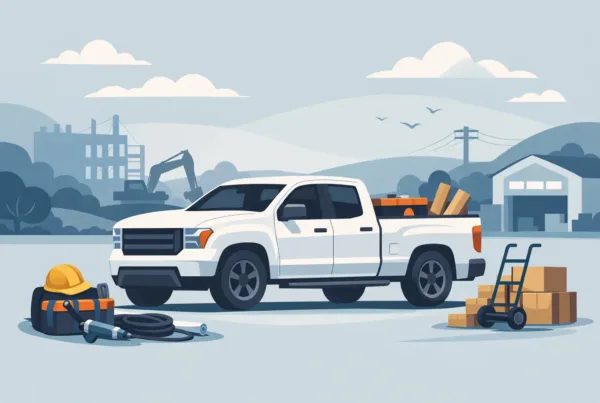
A closed truck has an enclosed cargo body with solid roof and side walls. It is commonly used for furniture moving, office shifting, retail stock, electronics, boxed products, event materials, and goods that need protection from dust, sun exposure, and public visibility.
The enclosed body gives customers more control over the condition of their cargo during transport. This matters when moving household items from an apartment, transporting office equipment between locations, or delivering packaged goods that should remain clean and dry. A closed truck also offers greater privacy for valuable stock and personal belongings.
Many closed trucks are loaded through rear doors, while some designs can offer additional access options. The exact loading method should be discussed before booking, particularly if a building has a tight loading bay, a low-height entrance, or a restricted service area.
When a closed truck is the better choice
A closed truck is usually the safer choice for items that can be damaged by dust, sun, moisture, or handling exposure. Household furniture, mattresses, appliances, office chairs, documents, display materials, and packaged retail goods generally benefit from an enclosed body.
For office moves, a closed truck keeps desks, computers, chairs, and boxed files together in a protected space. For event teams, it can be a good option for banners, branded materials, lighting accessories, décor, and equipment cases that need to arrive presentable at the venue.
The trade-off is loading flexibility. Very tall, wide, or irregularly shaped materials may be harder to place inside a closed body. If the load needs a crane, forklift access from above, or frequent side loading, an open truck may be more efficient.
Open Truck vs Closed Truck: The Main Differences
The clearest difference is cargo protection. A closed truck protects the entire load with its fixed body, while an open truck needs the cargo to be protected and secured individually. If the goods cannot tolerate exposure, a closed truck is normally the better starting point.
Loading access is the next major difference. Open trucks make it easier to handle oversized materials and site equipment. Closed trucks are better for organized, boxed, stackable loads that can be moved through rear doors without difficulty.
Visibility also matters. With an open truck, the load is visible from outside, even when covered. A closed truck keeps personal, commercial, and high-value goods out of view. This can provide extra reassurance during residential moves, store transfers, and office relocations.
Finally, consider the delivery environment. A construction yard may need an open flatbed because workers or machinery must unload from the side. A residential tower may need a closed truck with a crew that can protect furniture and carry items from the parking area to the building access point. The truck body should support the real conditions at both ends of the journey.
Match the Truck to Your Load, Not Just the Weight
Weight capacity is essential, but it is not the only factor. A 1-ton or 3-ton truck may have enough payload for your goods while still being unsuitable because the cargo is too long, too tall, too fragile, or difficult to load. Measure the largest items and describe their shape when requesting transport.
For example, a compact apartment move may fit a closed 1-ton or 3-ton truck if the items are boxed and include normal furniture. A larger villa move may require multiple trips or a larger truck, depending on the volume. Construction materials can be heavy even when they take up little space, so payload limits must be checked carefully. A light but oversized event structure may need an open truck despite weighing far less than the truck’s maximum capacity.
Give the transport team clear details: what is being moved, approximate dimensions, estimated weight, whether the goods are palletized, and whether loading equipment is available. Mention any stairs, elevators, parking restrictions, gate timing, or site safety rules. Accurate information helps assign the right vehicle and reduces waiting time.
Consider Tail Lift and Crane Hi-Up Options
The choice is not always limited to a standard open or closed body. A tail lift truck can make a major difference when heavy cartons, appliances, equipment cases, or palletized loads need to be raised from ground level. It can reduce manual lifting and improve safety where no loading dock is available.
A crane Hi-Up truck is useful when materials must be lifted onto or off the vehicle at a worksite. It may suit equipment, construction supplies, generators, and other items that cannot be handled safely by hand. The required lifting radius, load weight, ground condition, and available clearance should be confirmed in advance.
These options are especially valuable for busy commercial and industrial jobs because they reduce dependence on extra handling equipment. Still, the right vehicle is based on the site and the cargo, not simply on choosing the largest truck available.
Plan for Safe Loading and Reliable Delivery
Whether you book an open or closed truck, safety starts before the driver arrives. Pack smaller goods in strong boxes, protect edges and breakable items, and separate anything that could shift or leak. Do not overload the vehicle or assume that extra space means every item can be stacked together.
For open trucks, ensure the load can be restrained safely and covered if needed. For closed trucks, plan the loading order so goods required first at the destination are accessible. Heavy items should be positioned low and stable, while fragile items need suitable padding and separation.
Businesses with regular transport needs can benefit from daily, weekly, or monthly rental arrangements. This gives operations teams flexible truck capacity without the cost and responsibility of owning and maintaining a fleet. It is useful for projects that change pace, seasonal retail requirements, event schedules, and ongoing site support.
Book Based on the Job You Have Today
An open truck is built for access, oversized materials, and practical site loading. A closed truck is built for protection, privacy, and organized transport of goods that need an enclosed space. Neither option is automatically better. The right choice comes from understanding the load, the route, and the handling conditions.
When timing is tight, share your cargo details early and ask for the truck body and capacity that fit the actual work. A properly matched vehicle, an experienced driver, and a safe loading plan keep your move or delivery moving forward with fewer surprises.