


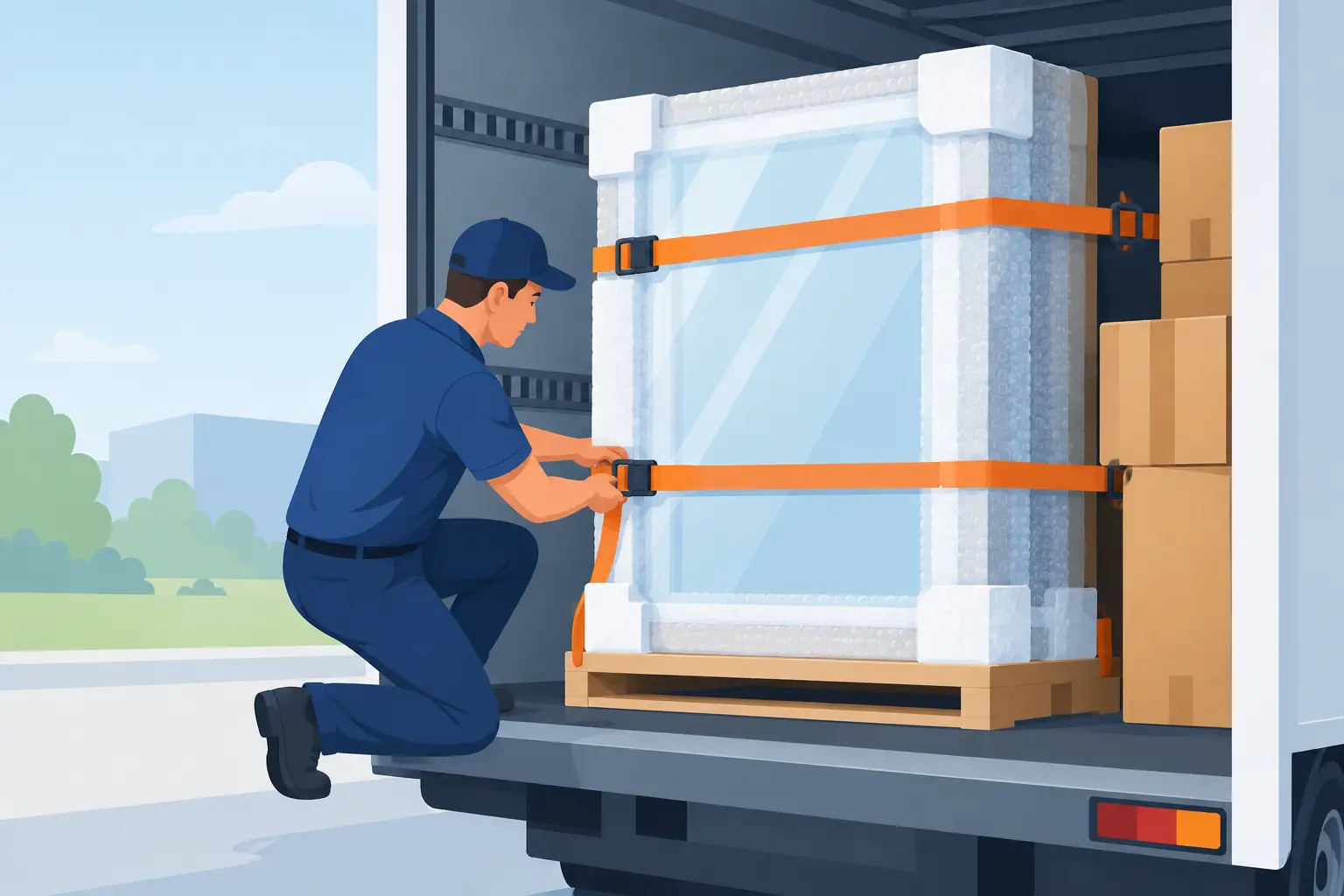
A single loose carton can turn a careful move into damaged furniture, broken glass, or costly equipment loss. Knowing how to secure fragile loads is not only about wrapping items in bubble wrap. It starts with choosing the right vehicle, planning the load, using proper restraints, and checking that nothing can shift during braking, turns, or uneven road conditions.
For home moves, office shifting, retail deliveries, event equipment, and industrial materials, fragile goods need a different approach from standard boxed cargo. The goal is simple: keep every item supported, separated, and firmly held in place from loading point to final unloading.
Why Fragile Loads Get Damaged in Transit
Fragile items are usually damaged because they move. A box may be packed well but still crack if it slides across a truck bed, tips against a hard surface, or has heavier cargo placed beside it. Glass tables, mirrors, electronics, display panels, appliances, decorative items, and precision equipment are especially vulnerable to vibration and impact.
Poor weight distribution is another common cause. When heavy items are loaded high, placed on top of lighter cartons, or allowed to lean against delicate goods, the load becomes unstable. Sudden braking can then push the full weight of the cargo forward.
The type of truck matters as well. An open pickup may be suitable for certain protected and strapped loads, while a closed truck offers better protection for boxed furniture, electronics, and items affected by dust, heat, or weather. There is no single setup for every job. The correct solution depends on the item size, weight, packaging, travel distance, and unloading conditions.
How to Secure Fragile Loads Before Loading
Preparation should happen before the truck arrives. Rushing to pack while loading is one of the easiest ways to miss weak boxes, forget padding, or stack items incorrectly. Give fragile goods their own protected loading plan.
Start With the Right Packaging
Use strong, undamaged cartons that match the size of the item. An oversized box allows movement inside, while a box that is too tight can place pressure directly on corners or glass. Fill empty spaces with packing paper, foam, air cushions, or clean blankets so the item cannot shift when the carton is moved.
For glass, mirrors, framed artwork, screens, and polished surfaces, protect corners first. Corner guards, foam edging, and moving blankets help absorb contact points that often crack or scratch. If an item has removable shelves, legs, cables, or loose parts, remove and pack them separately with clear labels.
Do not rely on a “Fragile” label alone. Labels help handlers identify sensitive cartons, but they do not stop movement. Mark the top of the box, identify the correct upright position, and make sure the package is physically protected.
Check Weight and Condition
Before loading, separate goods into three groups: heavy stable items, medium-weight cartons, and fragile or lightweight pieces. This makes it easier to create a safe loading order. Never place a heavy generator, tool box, furniture panel, or equipment case on a carton containing glassware or electronics.
If a box feels weak, wet, crushed, or poorly sealed, reinforce it or repack it. A damaged carton may hold up while sitting still but fail when lifted, strapped, or exposed to road vibration.
Choose the Right Truck Setup
The vehicle should support the load rather than force the load to fit. For a small number of boxed household items, a 1-ton pickup with careful securing may be enough. Larger furniture moves, office materials, exhibition displays, or commercial stock may need a 3-ton, 5-ton, or larger truck with sufficient floor space to avoid unsafe stacking.
A closed truck is usually the better choice for sensitive goods that require protection from dust, direct sunlight, and outside exposure. An open pickup can work well for properly wrapped furniture, machinery, or items that need easy side loading, provided the cargo is fully covered and securely tied down. For heavy fragile equipment, a tail lift can reduce the risk of dropping an item during loading and unloading.
At Fast Movers General Transport LLC SPC, customers can arrange pickup trucks from 1 to 10 tons with experienced drivers for planned and urgent transport support across Abu Dhabi. Sharing the item dimensions, approximate weight, number of cartons, and access conditions before booking helps ensure the right truck is sent for the job.
Load Fragile Items in the Safest Order
Place the heaviest and most stable cargo on the truck floor first. Keep the weight low and spread it evenly from side to side. This improves vehicle balance and creates a solid base for lighter cartons and protected items.
Fragile pieces should be loaded after the heavy base is secure. Keep them upright when the manufacturer or packaging instructions require it. Mirrors, glass panels, and large frames should travel vertically in a protected rack or against a padded, stable surface, not flat beneath other cargo. However, some items, such as certain televisions or appliances, have specific transport instructions, so follow the manufacturer guidance where available.
Leave no open gaps that allow cartons to slide. Use blankets, foam pads, empty secured cartons, or load bars to fill controlled spaces. The aim is not to pack the truck as tightly as possible. It is to prevent movement without crushing the goods.
Use Straps, Blankets, and Edge Protection Correctly
Ratchet straps and tie-downs should hold the load in place without applying too much force to a delicate box or surface. Put moving blankets, corner protectors, or padding between the strap and the item. A strap directly over a glass panel, wooden edge, or appliance door can cause damage even before the truck starts moving.
Secure cargo to appropriate anchor points, not to weak rails, loose handles, or other cartons. Tighten straps enough to stop movement, then check them again after a few minutes. Materials can settle as the load compresses.
For mixed loads, use separation. Furniture blankets between items prevent rubbing, while cardboard sheets or foam boards can protect flat surfaces. Small fragile cartons should not be left on top of tall stacks where they can fall during a turn.
Check the Load Before the Truck Moves
A final walk-around takes only a few minutes and can prevent major losses. Confirm that truck doors, tailgates, and side panels are fully closed and locked. Check that straps are tensioned, loose ends are tied away, and no item is leaning at an unsafe angle.
Open pickups need extra attention. The cargo should be protected with a properly secured cover when needed, but the cover must not become a substitute for tie-downs. Covers protect surfaces from exposure. Straps and load restraints stop movement.
If the load includes expensive equipment, take photos before departure. This creates a clear record of the condition and packing arrangement. It is especially useful for office relocations, event installations, retail displays, and project materials handled by several teams.
Drive for the Load You Carry
Even the best packing can be affected by aggressive driving. Fragile loads require smooth acceleration, steady braking, controlled turns, and enough following distance to avoid sudden stops. Drivers should account for road humps, ramps, uneven access roads, and tight delivery areas.
Route planning also matters. A longer route with smoother access may be safer than a short route with difficult turns, low clearances, or rough industrial roads. For deliveries to busy malls, event venues, construction locations, or residential towers, confirm loading bay access, parking space, elevator availability, and receiving contacts before leaving.
For longer journeys or multi-stop jobs, inspect the cargo during breaks or after the first section of the trip. Straps can loosen slightly, and cartons can settle. Correcting a small issue early is far easier than dealing with a shifted load at the destination.
Unload With the Same Care
Damage often happens at the final stage, when a team is tired or trying to finish quickly. Clear the unloading path before opening the truck. Remove straps carefully, supporting any item that may have been held in place by the restraint system.
Unload fragile goods before moving heavy items around them. Keep cartons upright, use two people for awkward pieces, and use suitable lifting equipment for large or heavy items. Once unloaded, inspect the goods before disposing of the protective materials.
A safe fragile-load move is built on preparation, not luck. Pack carefully, select a truck with enough protected space, secure every item against movement, and give the load the driving and handling attention it deserves.