

A factory move can stop production long before a machine leaves the floor. One incorrect lift, an underestimated load weight, or a truck that cannot access the loading point can create costly delays and safety risks. Knowing how to move factory equipment starts with a proper plan, the right lifting method, and transport support that matches the machine and site conditions.
For factories, workshops, steel operations, plastics businesses, and project sites in Abu Dhabi, equipment transport is rarely a simple pickup job. Machines may be oversized, sensitive to vibration, fixed to foundations, or located inside busy industrial areas. The safest approach is to prepare every stage before the vehicle arrives.
Start With a Full Equipment Assessment
Before booking a truck or arranging lifting equipment, identify exactly what needs to move. Record the equipment type, dimensions, total weight, center of gravity, and any parts that can be removed for safer transport. A machine that looks compact can still weigh several tons, while a long item may require more deck space than expected.
Check whether the equipment has lifting points supplied by the manufacturer. These points are designed for slings, chains, or lifting beams. Never assume that a frame, pipe, guard, or motor housing can safely carry the machine’s full weight. If lifting points are missing or unclear, a qualified rigger or equipment technician should confirm the method before work begins.
It also helps to inspect the route inside the facility. Measure doors, ramps, loading bays, overhead clearances, turning areas, and floor conditions. Forklifts and pallet jacks need firm, level surfaces. Heavy machinery may need skates, rollers, or a crane Hi-Up truck instead of a standard forklift.
Choose the Right Vehicle for Factory Equipment
The transport vehicle should be selected based on the load, not just on what is available quickly. A small pump, toolbox, or packaged parts may fit in a 1-ton pickup. Larger equipment, fabrication materials, generators, machinery components, and palletized loads may need a 3-ton, 5-ton, 7-ton, or 10-ton truck.
An open pickup can work well when loading is straightforward and weather is not a concern. A closed truck offers better protection for sensitive controls, electrical panels, and equipment that should not be exposed to dust. A flatbed trailer is often the practical choice for wide, tall, or heavy machinery because it gives easier access for forklifts and cranes.
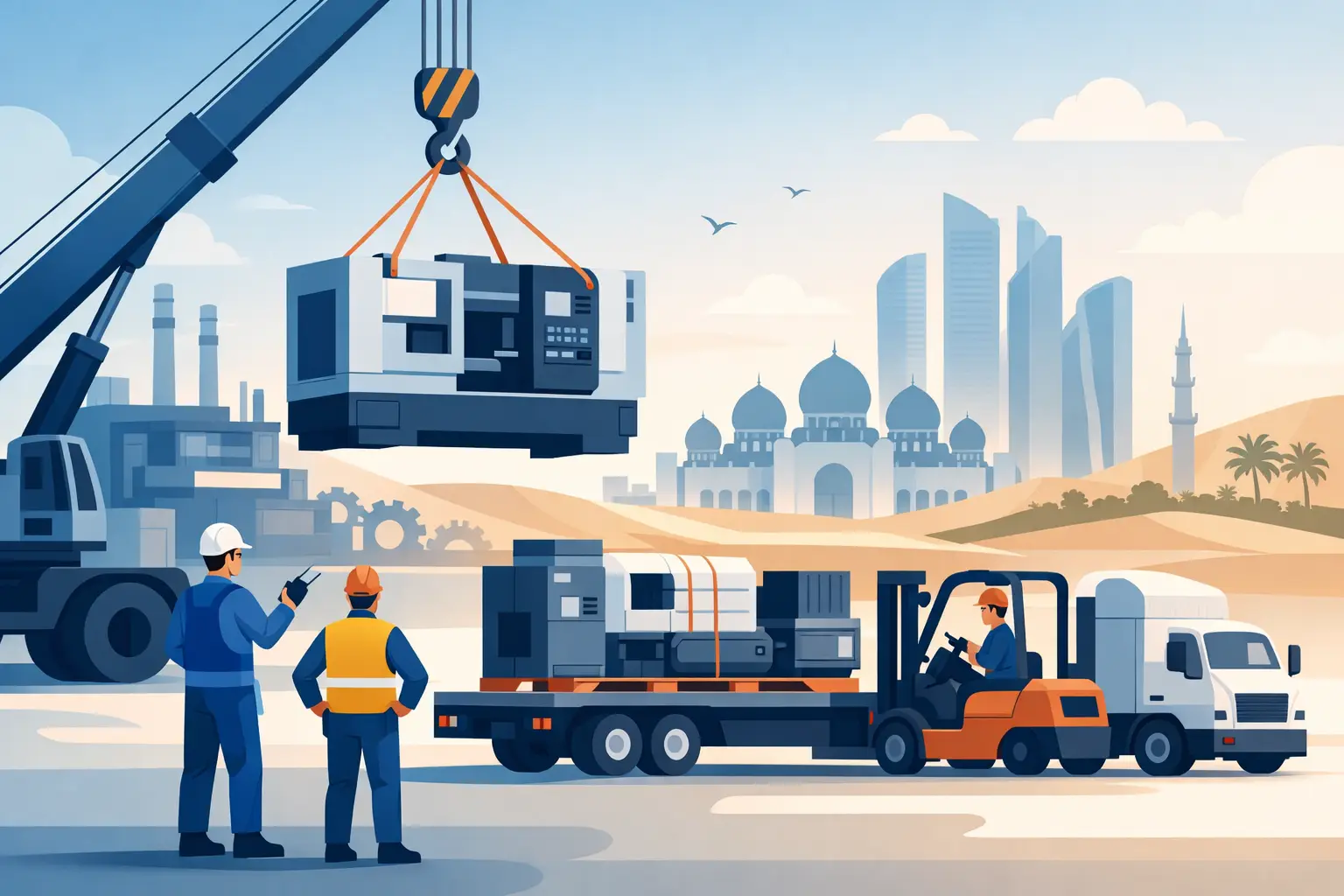
For equipment that cannot be lifted with a forklift at the collection or delivery point, a crane Hi-Up truck may be the better solution. Tail lift trucks are useful for smaller wheeled equipment and palletized items, but they are not a replacement for proper lifting equipment when dealing with heavy machinery. The correct option depends on the weight, dimensions, loading height, and site access.
Do not overload the truck or rely on approximate weights. The truck capacity must include the machine, packaging, skids, tools, spare parts, and any other items placed on the deck. Loading within the rated capacity protects the vehicle, the driver, the load, and everyone working nearby.
Plan the Lifting and Loading Method
Moving factory equipment normally involves three separate tasks: releasing the machine, lifting or rolling it from its position, and securing it on the vehicle. Each step needs clear responsibility. Decide in advance who will disconnect power, air, water, hydraulic lines, or other service connections.
Equipment should be shut down, isolated, and drained where necessary before it is moved. Loose accessories, detachable guards, cables, trays, and fragile components should be removed, labeled, and packed separately. This reduces the chance of damage and makes installation at the new location faster.
The loading team should understand the machine’s center of gravity. An uneven load can shift suddenly when it is raised, especially when motors, control cabinets, or drive systems sit on one side. Use suitable rated lifting gear and keep people out of the lifting zone. No one should stand beneath a suspended load or between equipment and a wall, truck, or other hard surface.
If machinery is being moved with forklifts, confirm that the forklift capacity is sufficient at the actual load center. Forklift capacity changes depending on fork length, load position, lift height, and attachments. A forklift rated for a particular weight is not automatically safe for every machine of that weight.
Secure the Load for Road Transport
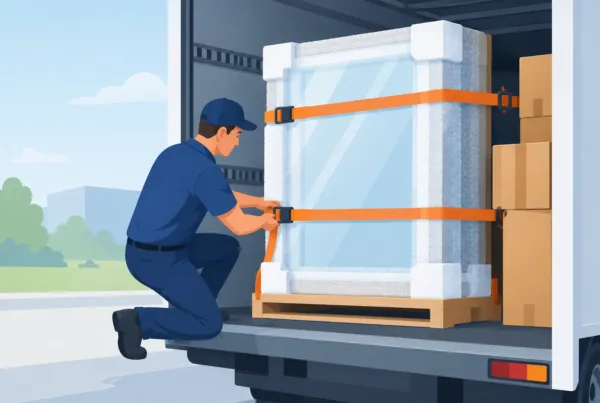
Proper load restraint is where many rushed factory moves fail. Equipment must be secured to prevent sliding, tipping, bouncing, or rotating during braking and turns. Tie-downs should be rated for the load and attached to suitable anchor points on the truck. Protect sharp edges with corner guards or sleeves so straps do not get damaged in transit.
Heavy machines may need timber blocking, anti-slip mats, chocks, chains, or multiple restraint points. The right setup depends on the machine shape and how it sits on the deck. Wheels, rollers, and movable parts should be locked or blocked before transport.
Avoid placing straps over fragile covers, instrument panels, hoses, or exposed controls. If the load has a delicate surface or sensitive components, use padding and protective wrapping. For electrical equipment, moisture and dust protection may be just as important as physical restraint.
The driver should inspect the load before departure and check it again after the first part of the journey. Road vibration can loosen restraints, particularly on loads with uneven surfaces. A few minutes spent checking straps can prevent a major loss.
Check Site Access, Timing, and Permissions
A well-planned equipment move can still be delayed by access restrictions. Many industrial facilities have gate procedures, safety inductions, truck timing rules, designated loading zones, and permit requirements. Confirm these details with the site manager before dispatching the vehicle.
In areas such as Musaffah, ICAD, KIZAD, and industrial yards around Abu Dhabi, access roads may be busy with heavy vehicles and active operations. Schedule loading and unloading at a time that minimizes conflict with production, shift changes, or site traffic. If a crane, forklift, or Hi-Up truck is required, make sure the work area is clear before arrival.
The delivery location matters as much as the pickup location. Confirm whether the truck can reverse safely, whether there is space to position lifting equipment, and whether overhead obstructions affect crane operation. If the equipment must be placed inside a building, check floor load limits and the final travel route all the way to the installation point.
Use an Experienced Team for Heavy or Urgent Moves
Factory equipment transport is not the time to make decisions based only on the lowest vehicle price. The best value comes from choosing a service that can provide the suitable truck size, an experienced driver, and a clear understanding of the loading requirements. A vehicle arriving without the right capacity or access plan can cost far more in lost work time than a properly arranged move.
For urgent industrial transport across Abu Dhabi, Fast Movers General Transport LLC SPC provides 1-ton to 10-ton pickup trucks, flatbed trailers, tail lift options, and crane Hi-Up trucks with experienced drivers. Availability around the clock helps businesses respond when a machine must be relocated, delivered to a workshop, or transferred between project locations without waiting for the next business day.
Share accurate details when requesting transport: equipment photos, weight, dimensions, pickup and delivery locations, loading method, and any special site rules. Clear information allows the right vehicle and support to be arranged from the beginning.
Keep Installation in Mind Before the Truck Leaves
A factory move is only complete when the equipment reaches its final position safely. Label cables, bolts, accessories, and disconnected lines so the installation team can identify them quickly. Take photos before dismantling, especially of electrical connections and machine alignment points. Keep manuals, service records, and calibration notes with the responsible team rather than inside loose packaging.
At delivery, inspect the machine before removing restraints. Check for visible movement, damaged packaging, loose parts, or fluid leaks. If the equipment needs careful alignment, leveling, or commissioning, allow enough time after unloading rather than rushing it back into operation.
The practical rule is simple: treat factory equipment as a planned project, not a last-minute delivery. When the load is assessed correctly, the vehicle is matched to the job, and the site is ready, your machinery can move safely with less downtime and far fewer surprises.