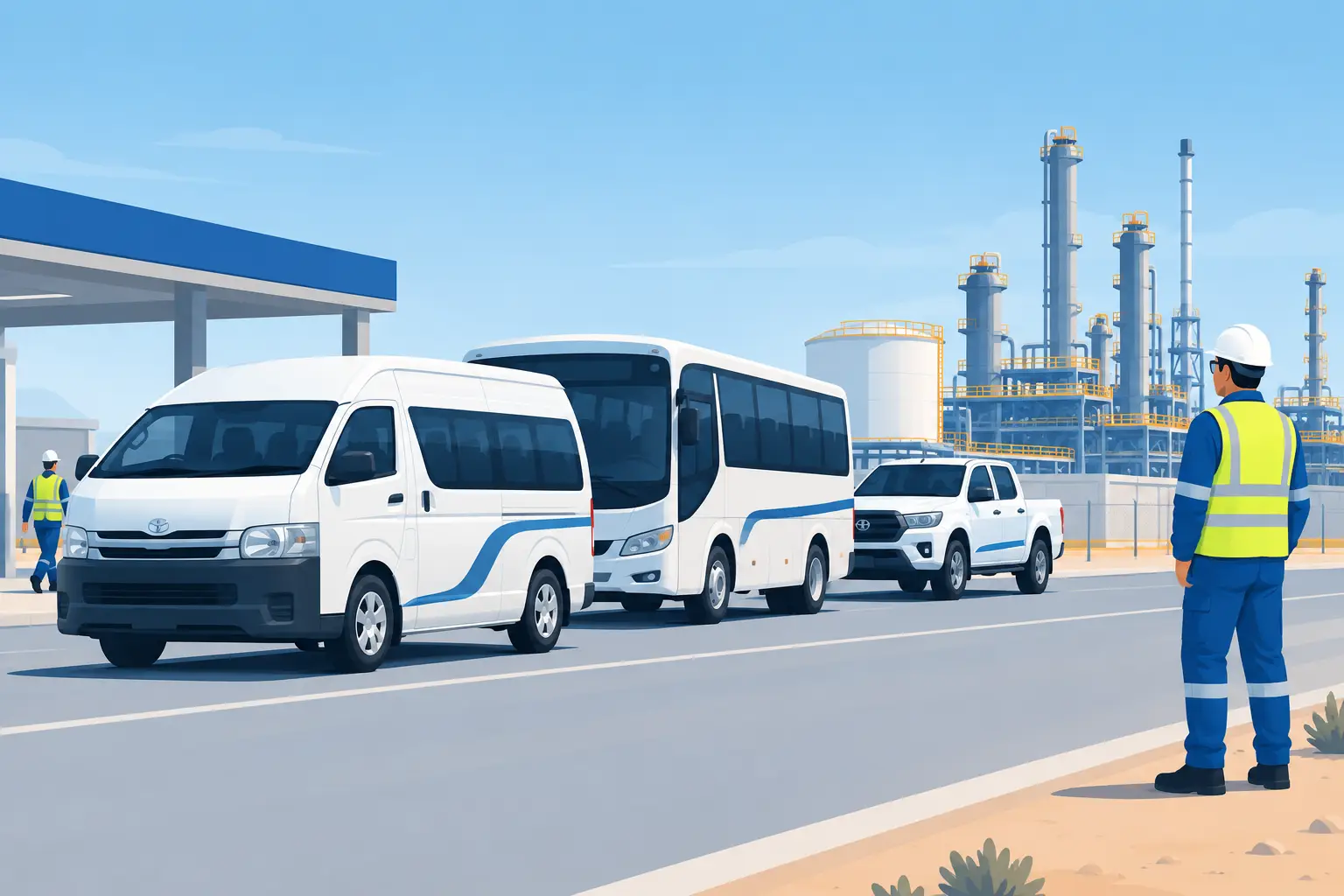
A delayed vehicle can hold up an entire work crew, leave materials waiting at the gate, and put pressure on an already tight project schedule. For ADNOC project vehicles, the priority is not simply finding a truck. It is arranging the right vehicle, experienced driver, loading plan, and timing for the work taking place on site.
For contractors, suppliers, fabricators, and industrial teams in Abu Dhabi, flexible pickup and truck rental support helps keep daily operations moving without the cost of maintaining a large fleet. The best arrangement depends on the cargo, site rules, access timing, and whether the job is a one-time movement or regular project support.
What ADNOC Project Vehicles Need to Handle
Oil field and industrial projects place different demands on transport than ordinary deliveries. A vehicle may need to move tools to an industrial yard in Musaffah, transport steel sections to a work area, carry plastic industry materials, or support a maintenance team with equipment and supplies. Loads can be long, heavy, awkwardly shaped, or required at a specific time.
That is why vehicle selection should begin with the actual job, not just the lowest rental price. A small pickup may be suitable for boxed equipment, hand tools, and light materials. Larger pickups, flatbeds, tail-lift trucks, and crane Hi-Up vehicles are better suited to palletized goods, machinery parts, steel items, or loads that need mechanical assistance during loading and unloading.
Project transport also requires practical planning. Site entry procedures, approved routes, driver identification, vehicle documentation, personal protective equipment, and loading restrictions can vary by project and location. Requirements should always be confirmed with the project coordinator or site management team before dispatch. A truck that is suitable for the cargo is not automatically suitable for every worksite.
Choose the Right Truck Capacity for the Job
Selecting a vehicle with too little capacity creates safety and scheduling problems. Selecting one that is much too large can add unnecessary cost and make access harder in confined yards. The right choice is based on total weight, cargo dimensions, loading method, and the number of trips required.
A 1-ton pickup is often a practical option for lighter equipment, boxed materials, maintenance supplies, and small site movements. It is easier to position in busy industrial areas and can be an efficient choice when the load is properly secured.
For larger materials and recurring site requirements, 3-ton and 5-ton pickup trucks provide more working capacity. These vehicles are commonly useful for construction materials, industrial components, workshop items, and bulk goods that do not require a full heavy trailer arrangement.
A 7-ton or 10-ton truck may be the better choice for substantial loads, large steel materials, equipment, or planned bulk movement. When cargo is long or needs open access from the side or rear, a flatbed can make loading more practical. Where the load is palletized or heavy enough to require lifting support, a tail-lift truck or crane Hi-Up truck may reduce handling time and improve control.
Before booking, provide the transport team with clear information: the item type, estimated weight, length, width, height, pickup point, delivery point, and preferred loading time. Photos can also help when the load has an unusual shape. Accurate information prevents the common problem of sending a vehicle that cannot safely carry or access the cargo.
Safety Comes Before Speed
Urgent transport is common on active projects, but urgency should never mean rushing a load onto the wrong vehicle. Safe ADNOC project vehicles depend on proper load distribution, suitable tie-down methods, good vehicle condition, and drivers who understand commercial transport work.
Cargo should be placed so that weight is balanced across the truck bed. Loose tools, pipes, steel pieces, panels, and packaged materials need appropriate restraint. Heavy items must not be positioned in a way that affects steering, braking, or stability. If lifting equipment is needed, arrange it before the truck arrives rather than trying to solve the problem at the pickup location.
Drivers also play a major role. An experienced commercial driver understands how to approach industrial gates, navigate yard traffic, position the truck for safe unloading, and work with site personnel. Clear communication between the driver, loading team, and project coordinator helps avoid delays and prevents confusion about where the vehicle should wait or unload.
Vehicle inspections matter as well. Tires, lights, brakes, cargo bed condition, and load restraints should be checked as part of normal operating practice. For site-specific requirements, confirm any additional inspection or documentation needs directly with the relevant project team. This keeps responsibility clear and avoids assumptions at the gate.
Daily, Weekly, or Monthly Rental: Which Works Better?
The best rental period depends on how predictable the transport requirement is. A daily truck rental works well for a single equipment movement, emergency material collection, event setup support, or a short-term task. It gives the project flexibility without a longer commitment.
Weekly rental can suit jobs with several planned movements across the same work period. It is useful when a team needs regular access to transport but does not require a truck all month. Monthly rental is often more cost-effective for ongoing construction, plant support, factory operations, and long-duration project work where vehicle demand is consistent.
There is no single answer for every contractor. A project with changing material requirements may need a mix of vehicle sizes on an as-needed basis. A company operating from an industrial yard may benefit from a dedicated truck and driver arrangement. Review the expected workload honestly. Paying for a vehicle that sits idle is not efficient, but depending on last-minute availability for every movement can create expensive delays.
Plan for Access, Timing, and Site Coordination
A truck rental is only one part of a successful transport movement. The schedule must account for loading readiness, gate access, traffic conditions, offloading equipment, and the receiving team’s availability. If the site is not ready when the truck arrives, waiting time can affect the next movement.
For project work around Abu Dhabi, especially in industrial areas such as Musaffah, ICAD, KIZAD, and Khalifa Port, timing and access coordination can make a major difference. Confirm the exact gate, contact person, unloading zone, and permitted arrival window before dispatch. If the destination has height restrictions, narrow access roads, or a controlled loading area, share that information early.
It is also helpful to identify who is responsible for loading and unloading. A driver can position the vehicle and support the transport process, but site teams should be ready with the required manpower or equipment unless a tail lift or crane Hi-Up vehicle has been specifically arranged. This prevents avoidable downtime and keeps the operation safe.
Reliable Transport Support for Project Work
Fast Movers General Transport LLC SPC provides 1-ton to 10-ton pickup truck rental options, including open and closed pickups, flatbeds, tail-lift trucks, and crane Hi-Up trucks with experienced drivers. Our team supports commercial, construction, industrial, event, and oil field operations across Abu Dhabi with daily, weekly, and monthly rental options.
We focus on practical service: selecting a suitable truck, confirming the movement details, arriving prepared, and helping customers keep their schedule on track. For urgent requirements, 24/7 availability gives project teams a dependable option when materials or equipment need to move without delay.
When arranging ADNOC project vehicles, share the job details early and choose capacity based on the real load, not guesswork. A properly planned truck movement protects the cargo, supports the workforce, and gives the project one less problem to manage.