
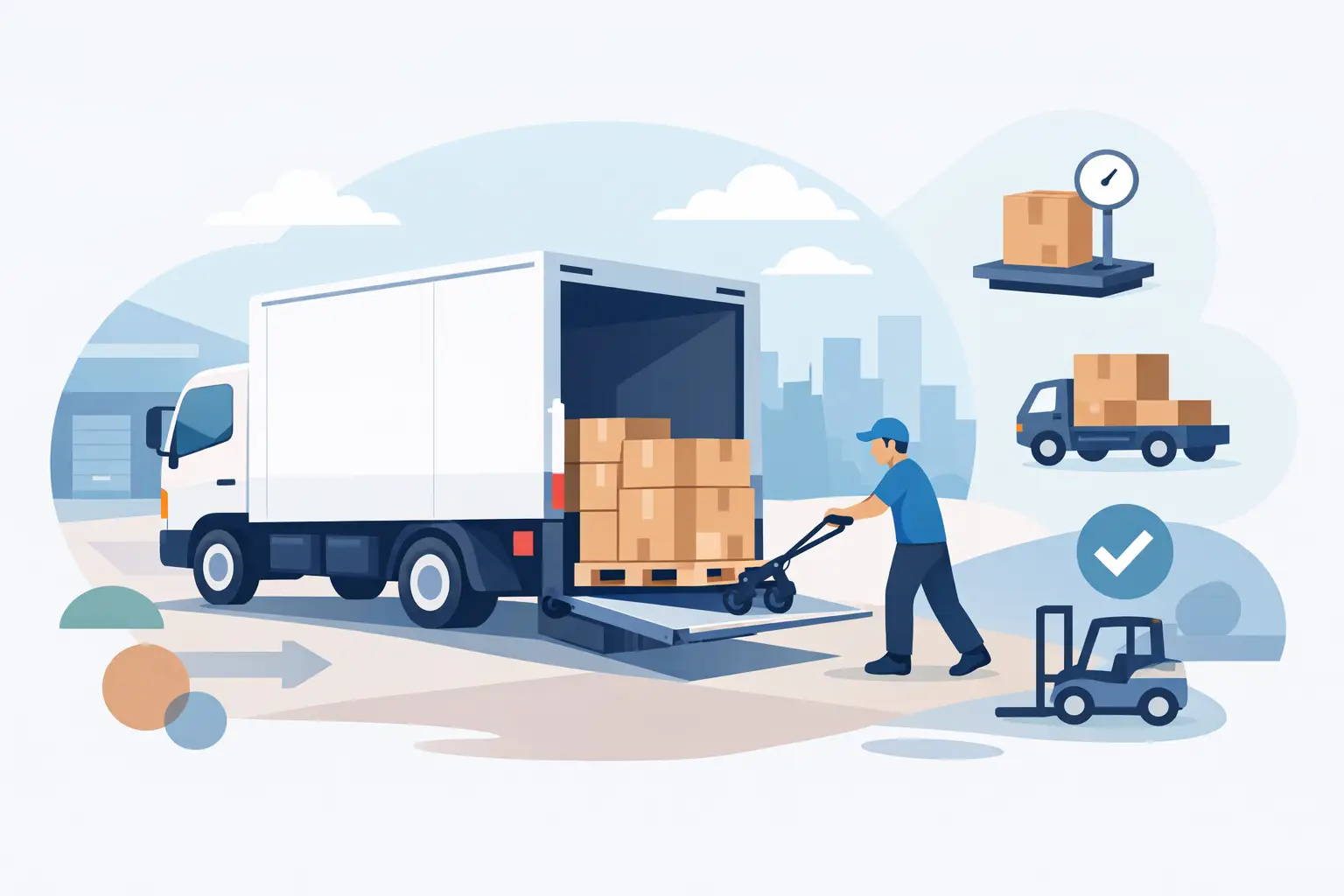
A loading dock is not always available when you need to move a heavy printer, stacked event cases, shop fittings, machinery parts, or household furniture. That is where a tail lift truck becomes useful. This tail lift truck review looks at what this vehicle does well, where it has limits, and how to decide whether it is the right rental option for your job in Abu Dhabi.
For many moves, the main challenge is not the distance. It is getting heavy or awkward goods safely from ground level into the truck bed. A tail lift provides a powered platform at the rear of the vehicle, reducing manual lifting and giving your team a more controlled way to load.
Tail Lift Truck Review: What You Are Actually Renting
A tail lift truck has a hydraulic platform fitted to the rear of the body. The platform lowers to ground level, goods are placed on it, and it rises to the truck floor height. It is commonly used for palletized materials, appliances, office equipment, event items, tools, boxed furniture, and commercial stock.
The biggest benefit is practical safety. Instead of asking workers to carry a heavy item up a ramp or lift it over the truck edge, the platform does the vertical work. This can reduce handling time and lower the risk of strain, dropped items, and damage to valuable goods.
It also gives businesses more flexibility at sites without a loading bay. Retail locations, villas, warehouses, exhibition grounds, workshops, and temporary event spaces often have different access conditions. A truck with a tail lift can handle many of these situations without needing a forklift at both ends.
However, a tail lift is not a solution for every load. It needs clear space behind the truck to operate, stable ground beneath the platform, and a load that stays within the lift’s stated weight rating. The truck itself may have a large carrying capacity, but the tail lift platform has its own separate limit. That detail should always be confirmed before booking.
When a Tail Lift Makes the Job Easier
A tail lift truck is especially useful when the load is heavy enough to be difficult by hand but not so large that it requires crane lifting. For an office move, it can help load desks, filing cabinets, boxed IT equipment, and display units. For home moving, it is helpful for refrigerators, washing machines, sofas, wardrobes, and packed cartons.
Event teams also benefit from tail lift access. Flight cases, sound equipment, lighting units, staging components, branded displays, and catering supplies can be loaded with more control. At busy venues, a properly scheduled truck and experienced driver help keep setup and breakdown work moving without unnecessary delays.
For industrial and commercial work, the vehicle can support deliveries of boxed parts, pumps, tools, packaged materials, and workshop equipment. In areas such as Musaffah, ICAD, KIZAD, and Mina Port, site access and timing can affect the job as much as vehicle size. It is sensible to check entry rules, available unloading space, and whether site staff will be present to receive the load.
The value is not only in lifting power. It is in reducing the number of risky manual handling steps. That matters when goods are expensive, the schedule is tight, or the same crew must complete several pickups and drop-offs in one day.
Capacity Is More Than the Truck Tonnage
One common mistake is choosing a truck based only on its ton rating. A 3-ton, 5-ton, or larger vehicle may suit the total weight and volume of your goods, but the tail lift must still be suitable for the heaviest single item being loaded.
For example, several lighter cartons may be easy to load even if their combined weight is high because they can be moved in separate trips on the platform. One large machine, safe, cabinet, or pallet can be different. Its individual weight, dimensions, center of gravity, and ability to sit securely on the platform all matter.
Measure the longest, widest, tallest, and heaviest items before requesting a vehicle. Let the rental provider know whether the goods are loose, boxed, palletized, wheeled, fragile, or unusually shaped. Clear details help the transport team recommend the right truck body and loading method rather than sending a vehicle that is too small or unsuitable.
A tail lift also uses part of the rear loading area when stowed. For high-volume jobs, this can slightly affect usable body space compared with another truck design. If your load is long steel, oversized equipment, or material that needs open-side access, a flatbed or crane hi-up truck may be more appropriate.
Safety Points That Matter at the Loading Site
Tail lifts are designed to make loading safer, but they must be used properly. The platform should be operated by trained personnel, and no one should stand beneath it or place hands near moving hinge points. Goods should be positioned securely and kept away from the platform edge.
Ground conditions deserve attention. Uneven pavement, loose gravel, curbs, steep slopes, and standing water can make loading less stable. In Abu Dhabi’s heat, workers can also tire more quickly during outdoor loading, especially on construction sites and event grounds. Scheduling sufficient time and using a controlled process is safer than rushing a load onto the truck.
The rear of the vehicle needs room. If a building has a narrow service lane, parked vehicles, low clearance, or a busy public entrance, the tail lift may not have enough safe operating space. This is one reason why a quick site check or accurate access description can save time on moving day.
For fragile goods, the tail lift should be only one part of the handling plan. Protective blankets, straps, corner protection, trolleys, and careful stacking still matter. A powered platform can lift the item, but it cannot prevent damage if the load is unsecured inside the truck.
Tail Lift Truck vs. Standard Pickup or Flatbed
A standard pickup can be a cost-effective choice for lighter loads, small furniture moves, cartons, and materials that can be safely loaded by hand. It is often easier to maneuver in residential streets and smaller access areas. But the higher bed level can make heavy-item loading difficult.
A tail lift truck is a stronger choice when regular manual lifting would be unsafe or slow. It usually offers a more protected and organized loading process, particularly when combined with an enclosed body. For office furniture, appliances, retail stock, and event equipment, that added handling support can justify the rental cost.
A flatbed works well for items that need crane loading, side access, or an open deck. It can be better for long construction materials and certain industrial loads. If the goods cannot fit safely on a tail lift platform, or if they need to be lifted from above, request a different vehicle type rather than forcing the load into an unsuitable setup.
The right option depends on the heaviest item, the total load size, the pickup and drop-off access, and the number of people available to help. The cheapest vehicle is not always the best value if it creates delays, extra labor, or damage risk.
What to Confirm Before You Book
Before arranging a tail lift rental, provide the collection and delivery locations, required date and time, and an honest description of the load. Ask about the vehicle’s available cargo space and the tail lift’s working capacity. If you have photos of the larger items or the loading area, sharing them can prevent misunderstandings.
You should also confirm whether loading assistance is required, whether the goods need securing, and whether there are site restrictions. Some commercial and industrial locations require advance vehicle details or have fixed delivery slots. Event venues may have strict setup windows, while residential buildings may have parking or elevator rules that affect the schedule.
Fast Movers General Transport LLC SPC provides tail lift, open, closed, and crane hi-up truck rental support from 1 to 10 tons across Abu Dhabi. For urgent moves, planned commercial transport, site deliveries, or event logistics, the best booking starts with the right load information and access details.
A tail lift truck is worth choosing when safe ground-level loading is the real problem you need to solve. Give the transport team the weight of the heaviest item, the dimensions of the load, and a clear picture of the site, and you will be far more likely to get a vehicle that works properly from the first pickup.