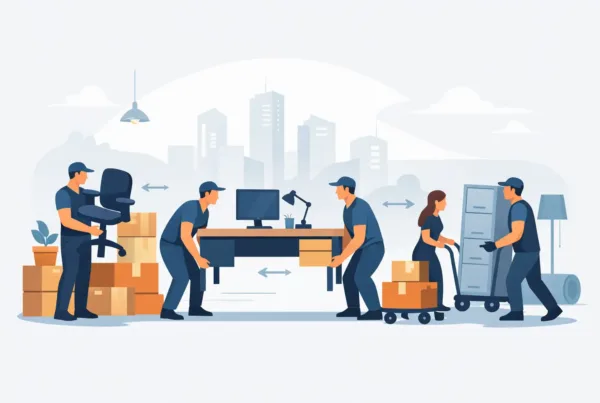



Monday morning after an office move is where problems show up fast. Missing desks, packed servers in the wrong truck, delayed files, confused staff, and a reception area that still looks like a storage room. Good office relocation support prevents that. It gives your business a clear transport plan, the right truck capacity, experienced drivers, and a move that protects both your equipment and your working day.
For most companies, moving offices is not just about shifting furniture from one address to another. It is about keeping operations running while assets, documents, IT equipment, and staff needs are all handled at the same time. That is why office moves need more than a basic vehicle booking. They need coordination, timing, and transport support that can adjust when the day does not go exactly as planned.
Why office relocation support matters
An office move can look simple on paper. In reality, even a small business can have dozens of workstations, fragile electronics, storage cabinets, meeting room furniture, and time-sensitive materials that need to arrive in the right order. If the transport side is weak, everything slows down.
Proper office relocation support reduces avoidable downtime. Teams can label, pack, load, and unload in a structured way. Large items are matched with the right vehicle size instead of being forced into too-small loads that create extra trips. Drivers who understand commercial transport can work with site access rules, loading points, and restricted timing windows without turning the move into a longer disruption.
There is also a cost issue. Many businesses focus only on truck rental price and forget the hidden costs of poor planning. Delays, damaged items, repeated trips, and staff standing idle all add up. Paying for the right support from the start is often the more practical choice.
What good office relocation support includes
The best support starts with understanding what is actually being moved. A small admin office, a retail back office, a construction site office, and a larger company floor all need different vehicle setups and loading plans. One move may work with a 1 ton or 3 ton pickup truck. Another may need 5 ton, 7 ton, or 10 ton capacity because of partitions, heavy cabinets, bulk furniture, or equipment.
Transport flexibility matters just as much as size. Some office moves need open trucks for quick loading of furniture and non-sensitive items. Others need closed trucks for added protection, especially when moving electronics, boxed documents, monitors, and office equipment that should stay protected from dust, heat, or shifting during transport. In some cases, a tail lift truck makes loading safer and faster, especially when heavier items must be handled without unnecessary manual strain.
Timing is another part of the job that gets underestimated. Many office relocations happen after business hours, overnight, or on weekends because companies want to avoid interrupting customer service and staff productivity. That means your transport provider needs to be available when the move actually makes sense for your business, not only during standard working hours.
Office relocation support for different business types
Not every company moves the same way, so the support should not be one-size-fits-all.
A small office usually needs speed and simplicity. A few workstations, chairs, shelves, and boxed files can often be moved in a short window if the loading sequence is organized well. In this case, the goal is to finish quickly and get staff back to work with minimal confusion.
A larger commercial office needs a more controlled process. Departments may move in phases. IT equipment may need separate handling. Reception furniture, meeting room setups, printers, storage, and branded materials all need proper placement. Here, office relocation support is less about one truck and more about a coordinated transport schedule.
Industrial and project-based businesses have another layer to consider. Site offices, portable units, equipment storage, tools, and operational materials may move between industrial zones and active work locations. These jobs often need flexible trucking capacity, practical drivers, and support that fits around real worksite conditions.
How to plan the move without losing work time
The easiest way to lose control of an office move is to treat it like a last-minute packing job. A better approach is to build the transport plan around business continuity.
Start with a simple move assessment. What has to go first, what can go later, and what absolutely cannot be delayed? IT systems, key desks, phones, files, and reception equipment often need priority. If those items arrive late or mixed into the wrong load, the whole office feels the impact.
Next, match the truck type to the load. This sounds basic, but it saves time. Too small means repeated trips. Too large can be inefficient if access is tight or loading is poorly organized. The right mix depends on your office layout, the building access, and how much equipment needs protected transport.
It also helps to assign one internal contact person. When drivers arrive, they need quick answers about loading points, elevator access, delivery sequence, and item priority. A single contact keeps decisions fast and avoids confusion on the ground.
Common problems during office moves
Most office relocation problems are predictable. That is the good news. The bad news is that many businesses still run into the same issues because they focus only on the moving date and not the move process.
One common problem is underestimating volume. Offices often have more loose items, archive boxes, spare chairs, and hidden storage than expected. Another issue is poor labeling. If furniture parts, staff boxes, and cables are packed without a room plan, unloading takes longer than loading.
Access is another major factor. Some buildings have restricted loading times, service elevator rules, or parking limits near the entrance. If the transport team is not prepared for that, the truck may arrive on time and still lose valuable time waiting.
Then there is the question of protection. Office furniture can handle normal transport, but monitors, printers, glass items, electronics, and documents need more attention. This is where reliable drivers and the right truck setup matter. Speed helps, but controlled handling matters more.
Choosing the right transport partner
When comparing providers, it is worth looking beyond the basic promise of moving items from A to B. For office relocation support, reliability is the main value.
A good transport partner should offer clear truck options, experienced drivers, practical scheduling, and support for urgent or after-hours jobs when needed. They should also understand that commercial clients care about downtime, safety, and coordination more than flashy marketing language.
This is especially important in active business areas and industrial zones where access timing, equipment handling, and site coordination can affect the whole day. In Abu Dhabi, businesses moving between commercial buildings, workshops, industrial sites, and project locations often need transport support that can respond quickly and work within real operating conditions.
Fast Movers General Transport LLC SPC pickup truck rental supports office moves with flexible truck options from 1 ton to 10 ton, including open, closed, tail lift, and crane hi-up trucks with drivers available 24/7. That kind of flexibility is useful when a simple office shift turns into a larger operational move.
Office relocation support and safety
Safety is not just about avoiding damage. It is also about reducing rushed handling, unnecessary lifting, and loading mistakes that can delay the move or create risk for staff and transport crews.
For heavier office items, proper truck access and loading support make a real difference. Filing cabinets, large meeting tables, copier machines, and storage units should not be treated like ordinary boxes. The right vehicle and an experienced crew help protect both the load and the people handling it.
There is always a balance between speed and care. Some businesses want the fastest possible move, which makes sense when downtime is expensive. But moving too fast without a plan usually creates delays later during unloading and setup. The better option is controlled speed – organized loading, proper truck matching, and clear delivery order.
Making the first day in the new office easier
The move is not finished when the truck doors close. A good relocation setup should make reopening the office easier, not harder.
That means priority items should arrive first. Reception setup, key workstations, essential documents, and IT equipment should not be buried behind decorative furniture or low-priority storage. If the unloading order is planned well, teams can start setting up immediately instead of waiting while everything is sorted on site.
It also helps to leave some flexibility in the schedule. Office moves often reveal small surprises such as an extra load, changed furniture layout, or delayed building access. A transport plan with no margin can become stressful very quickly. A plan with room to adapt is usually the smarter choice.
Office relocation support works best when it is practical, responsive, and built around how businesses actually operate. If your company is planning a move, the right trucks, the right timing, and the right transport team can make the difference between a long disruption and a working day that gets back on track faster than expected.