


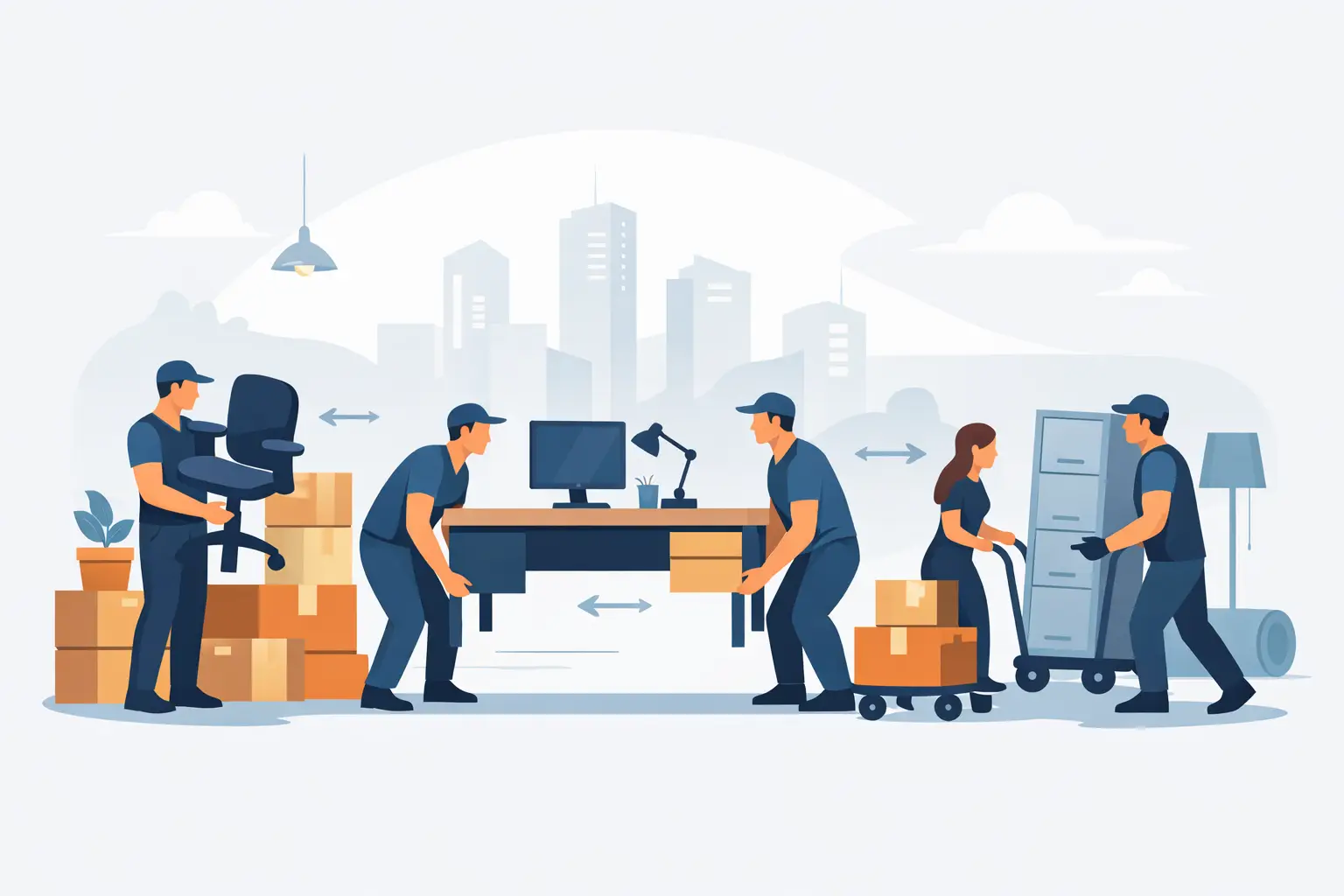
A rushed office move usually shows up in the same places – scratched desks, missing hardware, blocked hallways, and a team that loses half a day trying to find cables and chairs. The best ways to move office furniture are not complicated, but they do require planning, the right vehicle, and a clear system for lifting, loading, and setting up again.
For small offices, it can be tempting to treat the move like a few personal trips with random helpers. That approach often costs more time than expected. Office furniture is bulky, awkward, and easy to damage if it is moved without protection or packed in the wrong order. If the goal is to get back to work fast, the move needs to be handled like an operation, not a last-minute errand.
Best ways to move office furniture without damage
The first step is deciding what is actually worth moving. Many offices keep extra cabinets, broken chairs, outdated counters, or heavy meeting tables that no longer fit the new space. Moving these items wastes truck space and labor time. Before anything is packed, walk through the office and separate furniture into three groups: move, replace, and remove. That one decision makes the rest of the job easier.
It also helps to measure both locations. A desk that fits well in the current office may not pass through the new door, elevator, or corridor. Reception counters, conference tables, and tall filing cabinets are common problem items. Measuring early prevents delays on moving day and gives you time to decide whether an item should be dismantled before loading.
Labeling matters more than most teams expect. Every furniture item, loose part, and box should match a room or department. If a workstation is dismantled, tape the screws, brackets, and small hardware into a sealed bag and label it clearly. Otherwise, reassembly turns into guesswork. A simple room-by-room labeling system saves time at the new office and reduces unnecessary handling.
How to prepare before moving office furniture
A good office move starts at least several days before the truck arrives. Disconnecting electronics, backing up files, clearing drawers, and removing glass panels should not be left for the final hour. Furniture should be emptied fully before lifting. Even a small cabinet becomes harder and less stable when files are left inside.
Desks with detachable legs, modular workstations, and storage units should be disassembled when it makes transport safer. Not every item needs to come apart, though. There is a trade-off. Taking apart simple furniture can save space, but over-disassembling creates extra assembly work later. The best choice depends on the furniture type, access points, and travel distance.
Protective materials are not optional if you want a clean result. Moving blankets, stretch wrap, corner guards, and strong straps help prevent scratches, dents, and shifting during transport. Glass tops, partitions, and delicate finishes need extra care. Office furniture often looks durable, but laminate edges, metal corners, and rolling components can be damaged quickly when they are stacked carelessly.
If your office building has management rules, check them early. Many commercial buildings have set hours for service elevators, loading bays, and parking access. Some require advance booking or a move permit. Ignoring this can delay the whole schedule. For businesses in busy areas of Abu Dhabi, access timing can be as important as packing.
Choose the right truck for the job
One of the best ways to move office furniture efficiently is to match the truck size to the load. This sounds basic, but it has a major effect on time and cost. If the truck is too small, you may need multiple trips. If it is too large for the access point or the amount of furniture, loading can become less secure unless the items are strapped properly.
For a compact office, a 1 ton or 3 ton pickup truck may be enough for desks, chairs, and light storage. A larger office move with conference tables, reception furniture, or bulk workstations may need a 5 ton, 7 ton, or 10 ton truck. If the furniture includes heavy items or difficult loading conditions, a tail lift or crane hi-up truck can make the move safer and faster.
The truck type also depends on what you are carrying. Open trucks are practical for many furniture moves, but enclosed transport may be better for items that need extra protection from dust or weather. Flatbed options can help with oversized loads, especially when furniture is large, industrial, or part of a temporary office setup for events and project sites.
This is where working with an experienced rental provider makes a real difference. A company like Fast Movers General Transport LLC SPC pickup truck rental can help match the load to the right vehicle and driver, which reduces wasted trips and handling problems.
Safe lifting and loading methods matter
Many furniture problems happen between the office door and the truck. Teams try to rush, lift unevenly, or drag heavy items across the floor. That creates injuries as well as damage. Office desks, cabinets, and counters should be lifted by enough people to keep the weight balanced. If an item is too heavy or awkward, use trolleys, dollies, or lifting equipment instead of forcing it.
Chairs should be stacked only if the design allows it safely. Cabinets should stay upright unless the manufacturer allows otherwise. Drawers should be secured shut, and rolling furniture should be locked or wrapped so it does not move during transport. Glass should never sit loose between larger pieces without padding and support.
When loading the truck, heavy items go in first and should be placed where the load will stay balanced. Lighter pieces can be layered after that, with blankets or padding between surfaces. Straps are essential. Furniture should not shift while the truck is moving, especially on longer routes or busy roads. A neat load is not just about appearance – it protects the furniture and makes unloading easier.
Keep the office move organized by priority
A smart move is not only about getting furniture from one place to another. It is about getting the business running again with minimal downtime. That is why loading order matters. Items needed immediately at the new office should not be buried behind unused cabinets or archived storage.
Reception desks, key staff workstations, meeting room basics, and IT-related furniture should be easy to unload first. If the move is happening in stages, create a clear priority list. Some businesses move core departments first and shift non-essential furniture later. That approach works well when the office cannot stop completely for the day.
It also helps to assign one contact person from the company side. When too many employees give instructions at once, the move slows down. A single coordinator can confirm room labels, answer access questions, and direct placement at the destination. That simple step avoids confusion and repeated lifting.
Best ways to move office furniture for different office sizes
For a small office, speed and simplicity usually matter most. A direct move with a properly sized pickup truck, basic wrapping, and labeled furniture may be enough. In this case, the biggest risk is underestimating how much time dismantling and reassembly will take.
For medium offices, coordination becomes more important. There are usually more departments, more shared furniture, and more sensitive items mixed into the move. A staged plan, clear labeling, and the right truck size can prevent long delays.
For large offices, furniture moving should be treated as a structured logistics job. Different teams may need different move windows. Larger desks, partitions, and boardroom pieces may require special handling equipment. Building access, loading zones, and installation timing all need to be managed carefully. The move is still manageable, but only if the planning is detailed.
What people often get wrong
One common mistake is focusing only on transport and forgetting setup. Moving the furniture is only half the job. If nothing is labeled, hardware is mixed together, and room layouts are unclear, the new office stays unusable longer than it should.
Another mistake is assuming all furniture can handle rough movement because it is commercial grade. Office furniture is built for daily use, not careless transport. Repeated dragging, poor stacking, and unsecured loading cause expensive damage fast.
The last mistake is trying to save money by using whatever vehicle is available instead of the right one. A proper truck with enough space, a trained driver, and suitable loading support usually saves time, labor, and replacement costs.
Office furniture moves go better when the plan is simple: reduce what you do not need, protect what you do, choose the right truck, and load with care. When each item arrives where it should and your team can start working again without confusion, that is when the move has really been done right.