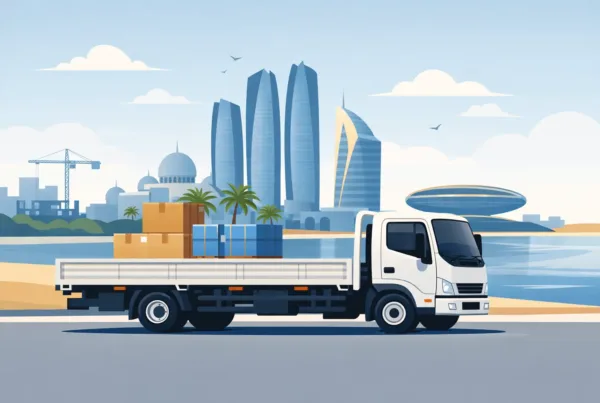


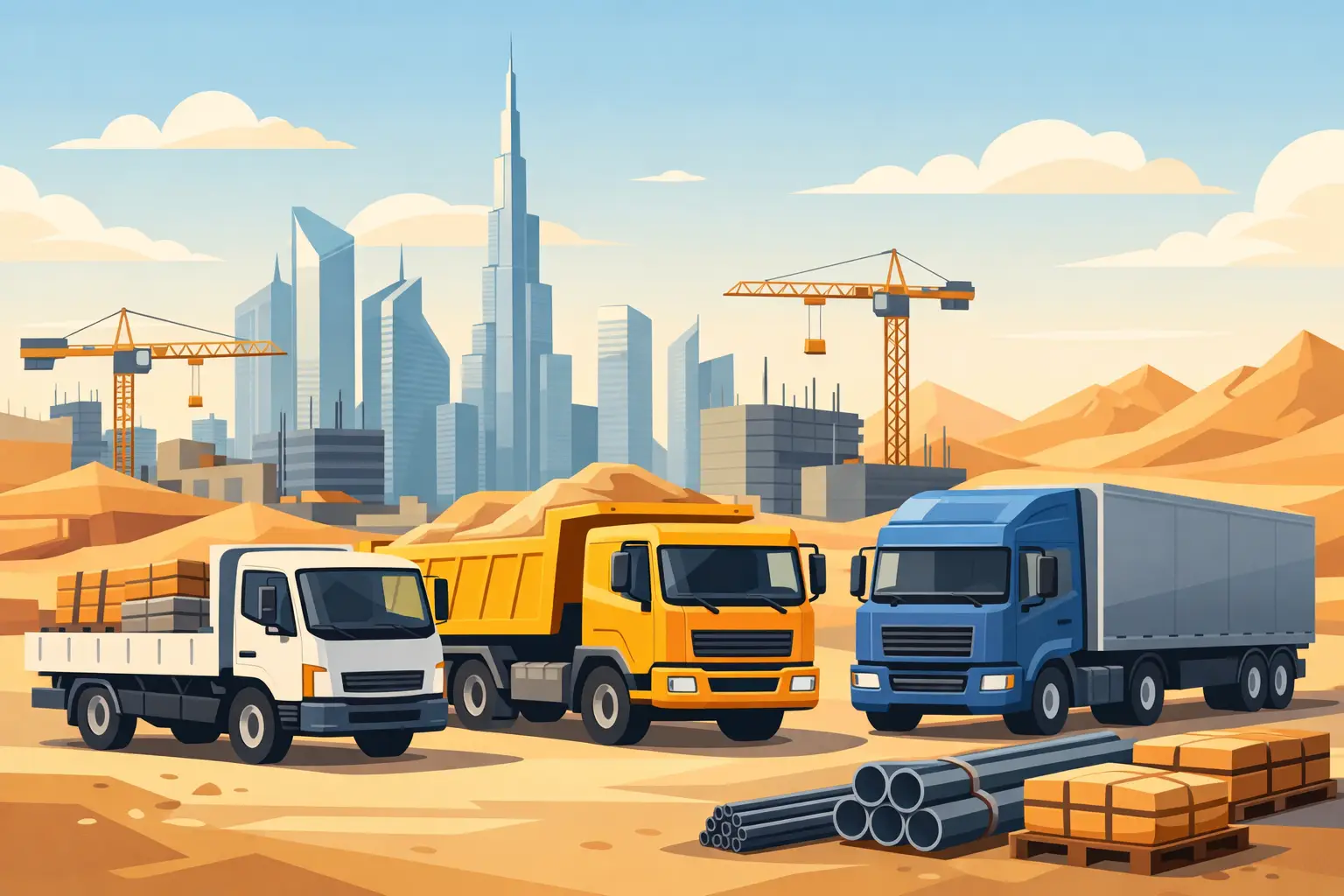
A delayed load of blocks, steel, or cement can stop an entire work crew. Choosing the best trucks for construction materials is not only about finding the biggest vehicle available. The right truck must suit the load weight, material shape, site access, unloading method, and delivery schedule.
For construction teams across Abu Dhabi, flexible truck rental can keep projects moving without the cost and responsibility of owning a fleet. From a few pallets of supplies to long steel sections and heavy equipment, selecting the correct truck size helps protect materials, reduce handling time, and avoid unnecessary transport costs.
Best Trucks for Construction Materials by Load Type
Construction materials do not all travel the same way. Bagged cement needs a dry, stable platform. Steel bars need enough bed length and proper securement. Pallets, tiles, pipes, scaffolding, and machinery each have different loading and unloading requirements.
A practical choice begins with the actual load, not an estimate based only on the size of the project. Ask how much the materials weigh, how much space they occupy, whether they can be stacked, and whether loading equipment is available at both locations. A truck that is too small may require multiple trips. A truck that is too large may add cost and make access to a crowded worksite more difficult.
1-Ton Pickup Truck for Small Site Deliveries
A 1-ton pickup truck is a useful option for light construction deliveries, urgent replacement items, tools, hardware, paint, electrical supplies, fittings, and smaller quantities of bagged materials. It is also suitable when access is limited, such as residential developments, narrow service roads, or active sites with restricted parking space.
This size works well for contractors who need fast transport support during the day rather than a full heavy-load vehicle. It can be an economical choice for moving small loads between a warehouse, workshop, supplier, and jobsite. However, it is not the right vehicle for dense, heavy loads that may exceed its safe carrying capacity.
3-Ton Pickup Truck for Daily Building Supplies
A 3-ton pickup truck is often a strong all-around choice for regular construction materials. It can support deliveries of blocks, cement, sand bags, plywood, gypsum boards, tiles, scaffolding parts, and moderate steel loads when properly secured.
For small and mid-size projects, this category gives more carrying capacity without becoming difficult to position at a site. It is especially useful when contractors need several scheduled deliveries during a project but do not require a large truck for every movement. Open-body options make loading from the side easier, while covered trucks can help protect materials that should stay dry and clean.
5-Ton Pickup Truck for Larger Material Loads
When a project requires heavier daily transport, a 5-ton pickup truck can provide the capacity needed for larger quantities of building supplies. It is commonly suitable for bulk materials, longer timber, multiple pallets, steel items, and equipment that needs a wider loading area.
This size can reduce the number of trips compared with smaller pickups, which may save time when labor, equipment, and deliveries are coordinated around a tight work schedule. Before booking, confirm that the access road, gate width, and unloading area can accommodate the vehicle safely. Capacity is valuable only when the truck can enter, park, and unload without blocking site operations.
7-Ton and 10-Ton Trucks for Heavy Construction Work
For major deliveries, 7-ton and 10-ton trucks are better suited to heavier loads and larger volume requirements. These vehicles can support substantial movement of steel, construction equipment, large palletized materials, long items, and bulk supplies for commercial, industrial, and infrastructure work.
The larger the truck, the more planning matters. The receiving site should have enough space for turning and unloading, as well as the right equipment and trained staff if materials cannot be handled manually. Delivery timing also needs coordination, particularly in busy industrial areas such as Musaffah, ICAD, KIZAD, and Mina Port, where vehicle movement and site entry procedures can affect the schedule.
Choose the Right Truck Body and Unloading Method
Payload is only one part of the decision. The body type determines how safely and efficiently the load can be handled.
An open pickup or flatbed is practical for oversized, long, or awkward construction materials. Steel bars, pipes, timber, scaffolding, and formwork are often easier to load onto an open bed, provided they are secured correctly. The trade-off is exposure to dust, heat, and weather.
A closed truck is a better option for materials that need protection from moisture, dirt, or direct sunlight. Electrical items, packaged finishes, paint products, tools, and interior materials can benefit from an enclosed body. It also provides additional security when goods need to remain inside the vehicle before unloading.
A tail lift truck is valuable when pallets or heavy items must be lowered without a loading dock. This can make delivery safer at stores, small sites, warehouses, and locations where a forklift is not immediately available. For equipment or materials that are difficult to lift manually, a crane hi-up truck can be the more efficient choice. It helps position heavy loads closer to the required unloading point, reducing manual handling and unnecessary delays.
Safety Comes Before Maximum Capacity
Trying to place as much material as possible on one truck can create a serious risk. Loads must remain within the vehicle’s permitted capacity and be distributed evenly. Heavy materials should sit low and stable, while long items must be supported correctly and secured to prevent movement during transport.
Steel, pipes, panels, pallets, and machinery need suitable restraints. Fragile tiles and gypsum boards may require additional protection to prevent cracks, chips, or shifting. Loose materials should be contained and covered where necessary. Proper loading is not just about protecting the truck. It protects drivers, site teams, other road users, and the materials your project has paid for.
Experienced drivers add real value on construction deliveries. They understand that a worksite may have uneven ground, limited reversing room, moving machinery, and changing access conditions. Clear instructions before dispatch can prevent problems: share the exact location, site contact, load details, preferred delivery time, and any access restrictions.
Renting Gives Construction Teams More Flexibility
Owning trucks can make sense for companies with constant transport needs, but it also brings maintenance, staffing, insurance, downtime, and fleet management responsibilities. Rental support gives contractors the option to match the truck to the job instead of relying on one vehicle for every type of material.
A small pickup can handle an urgent tools delivery in the morning, while a 7-ton truck may be needed later for steel or bulk supplies. This flexibility is useful for contractors working across multiple sites or managing projects with changing material requirements.
Fast Movers General Transport LLC SPC provides 1-ton to 10-ton pickup truck rentals, including open, closed, tail lift, and crane hi-up truck options with experienced drivers. Daily, weekly, and monthly arrangements are available for businesses that need dependable transport support and 24/7 availability across Abu Dhabi.
Questions to Ask Before Booking a Construction Truck
Before arranging transport, confirm the material weight, dimensions, number of pallets or bundles, pickup and delivery locations, and whether loading or unloading equipment is available. It also helps to state whether the site needs an open bed, covered vehicle, tail lift, or crane hi-up service.
Do not assume a truck can carry a load simply because the materials fit physically in the bed. Weight, balance, bed length, securement, and access all matter. Giving complete information at the start allows the transport team to recommend the right vehicle and avoid last-minute changes.
The best choice is the truck that carries your materials safely, reaches the site without difficulty, and supports your schedule at a fair cost. When the load is planned properly, your team can spend less time waiting for materials and more time building.